Fehmarn Mix

So steh ich hier, ich kann nicht anders

Rückmeldung aus meinem DIY Studio. Für das Minialbum „Fehmarn“ von der frankieband versuche ich gerade einen völlig anderen Ansatz zu finden.

Wie schon bei der Sinatra Produktion davor setze ich wieder auf einen möglichst analogen Sound, um diese crispen, aufdringlich digitalen Klänge im oberen Mittenbereich und in den Höhen auszutricksen.

Da es sich diesmal um eine Rockproduktion handelt, die viel Gitarrenarbeit erfordert, will ich den Gesamteindruck des Klangs in die 90er schieben. 

Darum ein völlig crazy Ansatz beim Mischen. Jede Spur wird als allererstes mit einer Bandmaschine ausgestattet. Also nicht auf den Mixbus, das wäre mir auch zu einfach, sondern wirklich auf jede einzelne Spur. Sogar auf die HiHat.
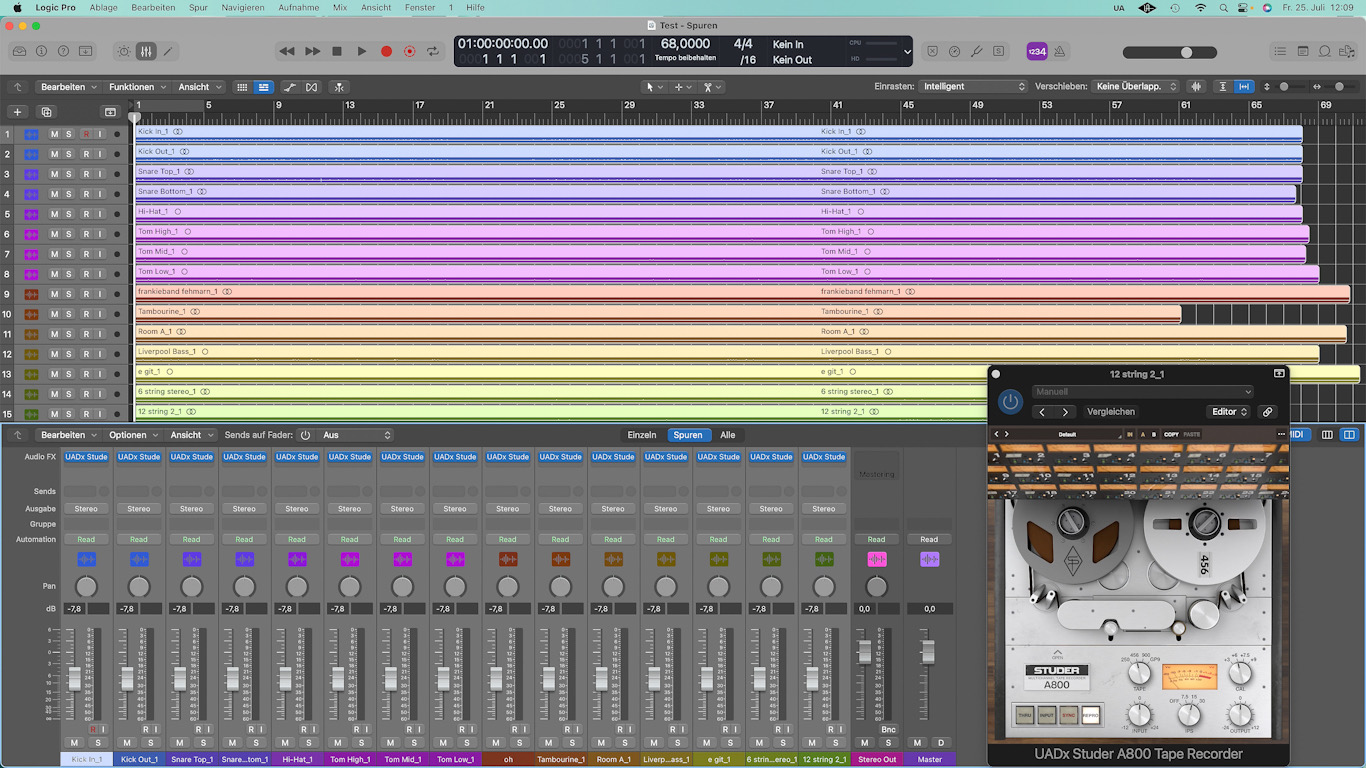
Die Studer Bandmaschine auf die Einzelspuren

Als nächsten Schritt füge ich jeder Spur ein gewisses Maß an Bandsättigung hinzu. Nicht zuviel natürlich, aber spürbar. Beim Bass darf es natürlich ein bisschen mehr sein.

Jetzt beginnt der Roughmix, (wie immer in Mono), bevor ich die Kanäle auf ihre Sub Busse lege. Kickbus, Snarebus, Tombus… alles zusammenfassend auf den Drumbus, Bassbus, E Gitarrenbus und Akustik Gitarrenbus, alles zusammen auf den Mixbus.
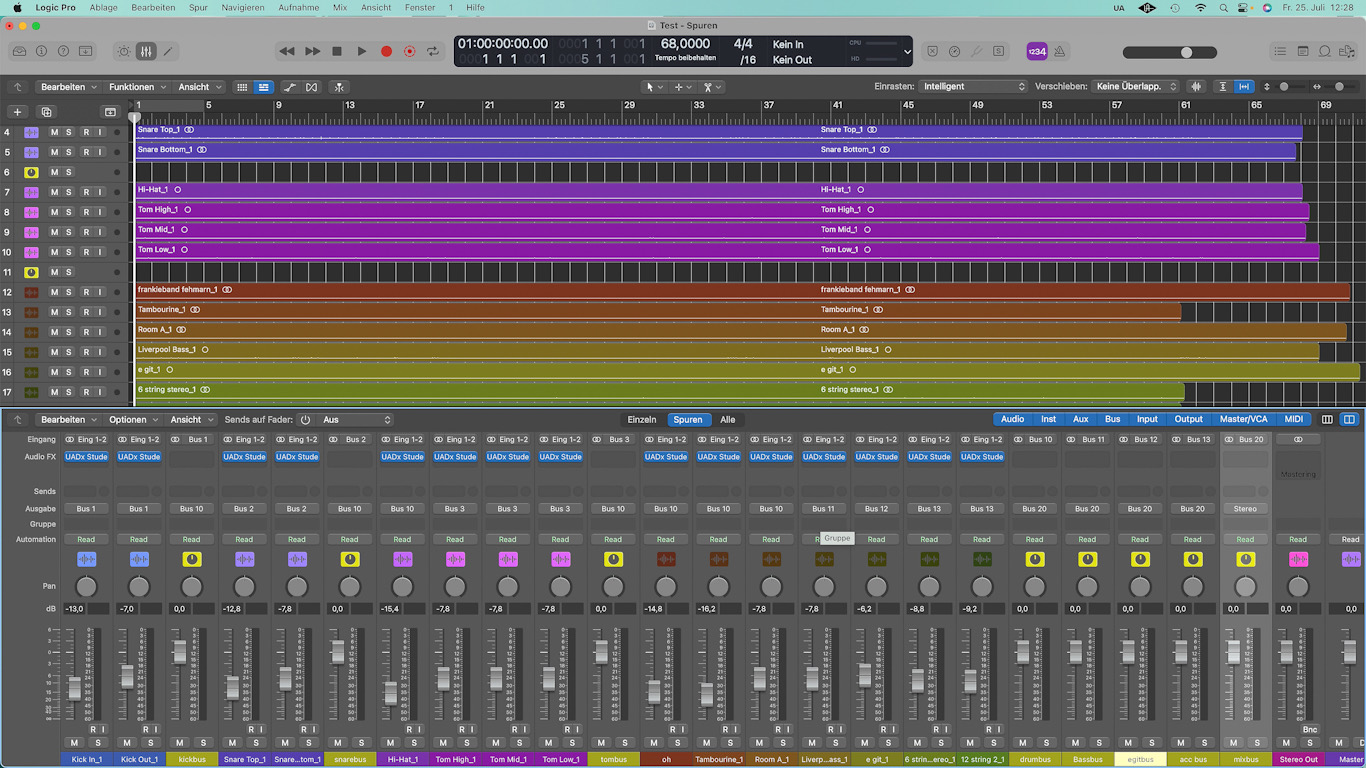
Aufteilung in Busse

Als nächstes statte ich die Kanäle mit dem Neve 1073 aus und steuere den Preamp ziemlich heiss an um den Klangcharakter des Neves reinzubringen.
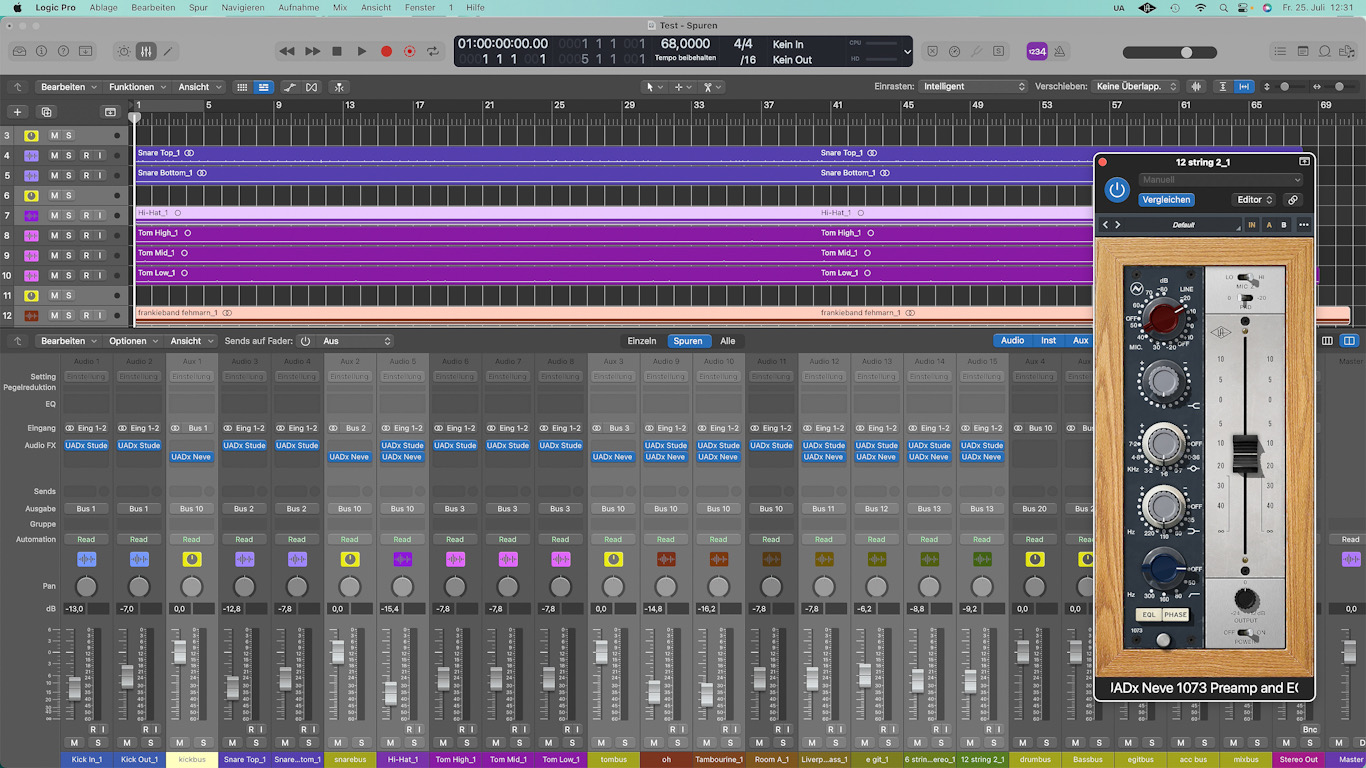
Den Neve 1073 als Preamp & EQ

Erst jetzt beginne ich damit den EQ einzusetzen und jeder Spur einen festen Platz im Klangbild zuzuordnen.

Als Kompressoren bedien ich mich einfach an den traditionellen 1176 und La2a. Mehr für die Kompaktheit der Signale und den unverwechselbaren Charakter. Nur für den Room Sound nehm ich einen SSL, um die Bässe und Höhen einfach abzuschneiden und das Signal stark zu komprimieren.
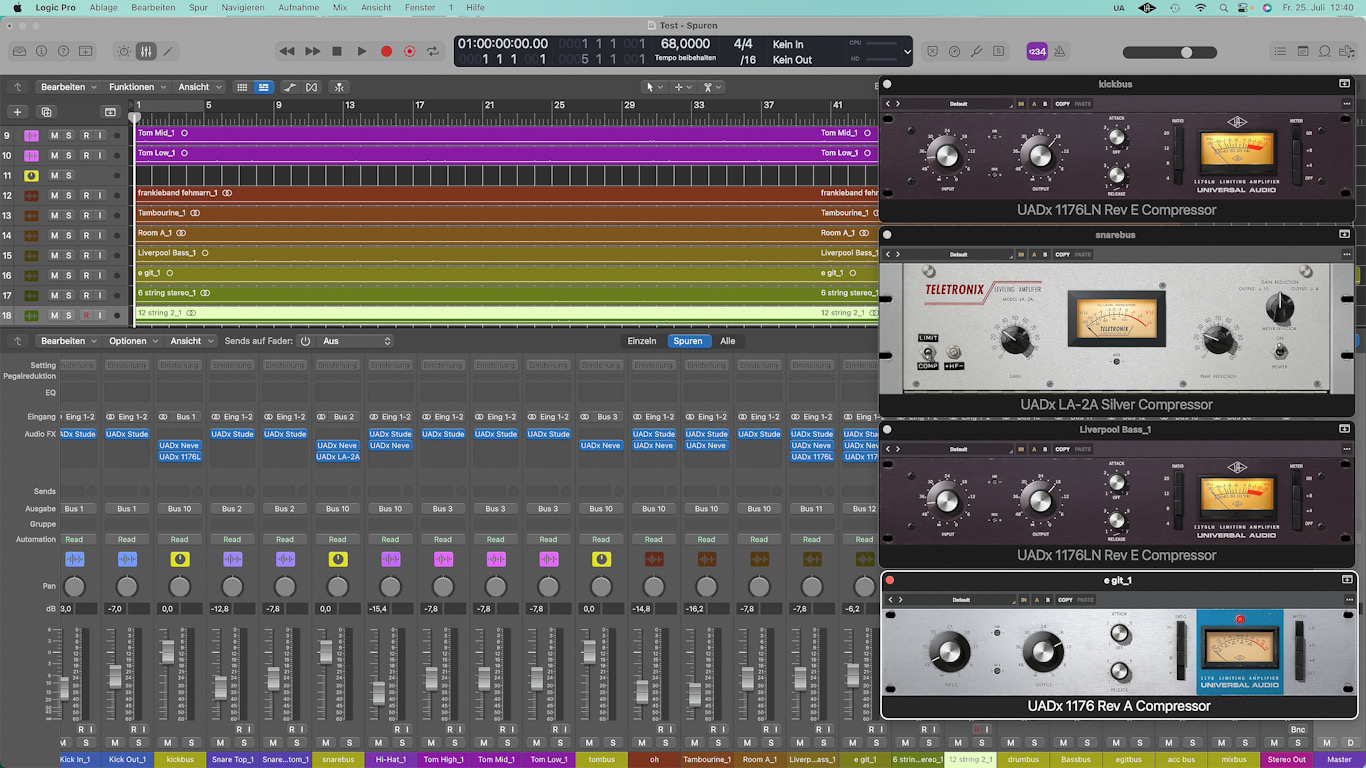
1176 & La2a Kompressoren

Jetzt werden die Busse nochmal bearbeitet. Den Drumbus mit dem C& Multiband Kompressor um Ordnung in die Tiefen und Höhne zu bringen. Danach den Oxford Inflator drauf, der mir den Gesamtklang wieder verschönert und den Empirical Labs Distressor für die parallele Kompression.

Den Bassbus mit dem 1176 extrem eingestellt ebenfalls parallel.
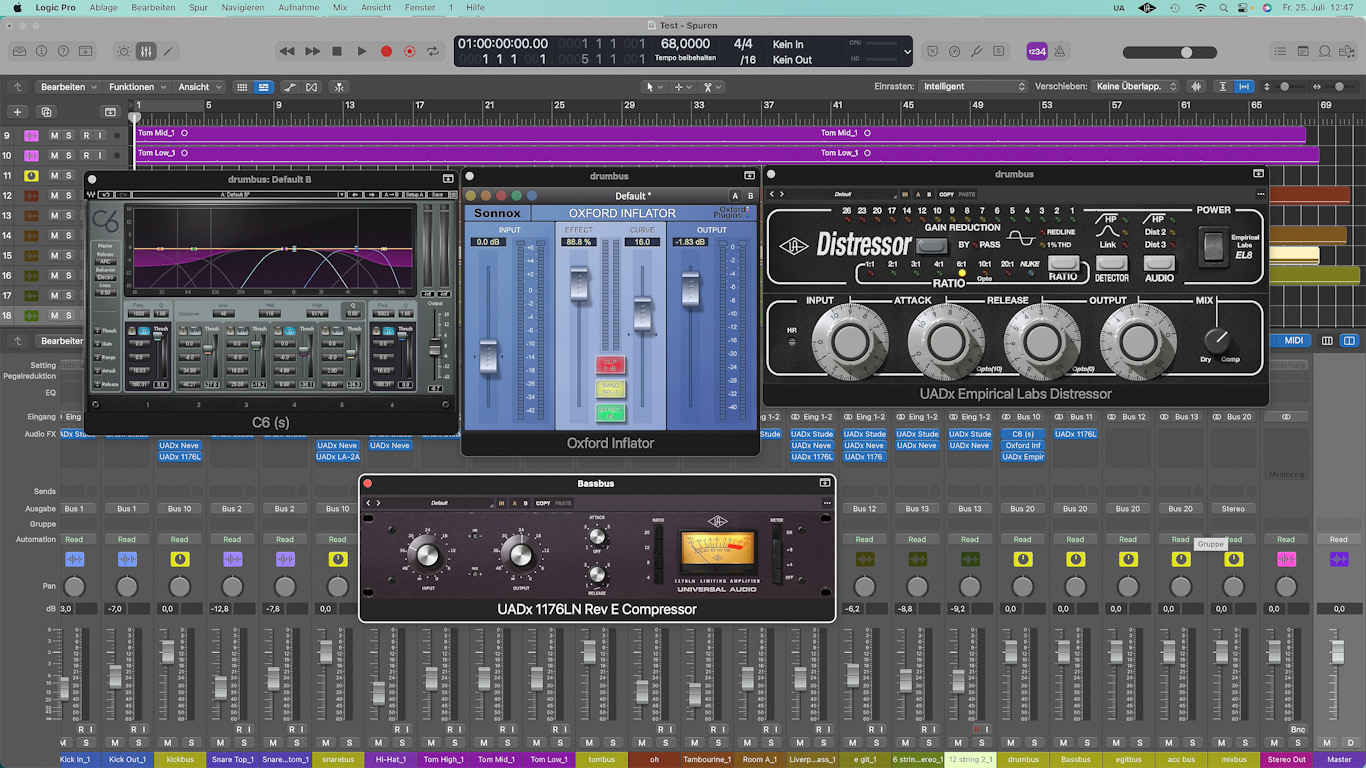
Parallele Kompression für Drums ans Bass

Jetzt klingts schon so richtig satt. Eine unglaubliche Lebendigkeit wird den Tracks eingehaucht. Einfach klasse!

Da die Produktion ziemlich trocken klingen sollte, nehm ich lediglich für die E Gitarre den Pure Platz Reverb und für die Akustikgitarre den Lexicon 224

Auf den obligatorischen Snare Hall verzichte ich lieber und verlass mich da auf den zugemischten Room Kanal auf den Drumbus.

Als zusätzlichen, räumlichen Effekt gebe ich dem Mixbus über einen Aux Weg die Raumsimulation des Sound City Studios hinzu und komprimiere ein wenig.
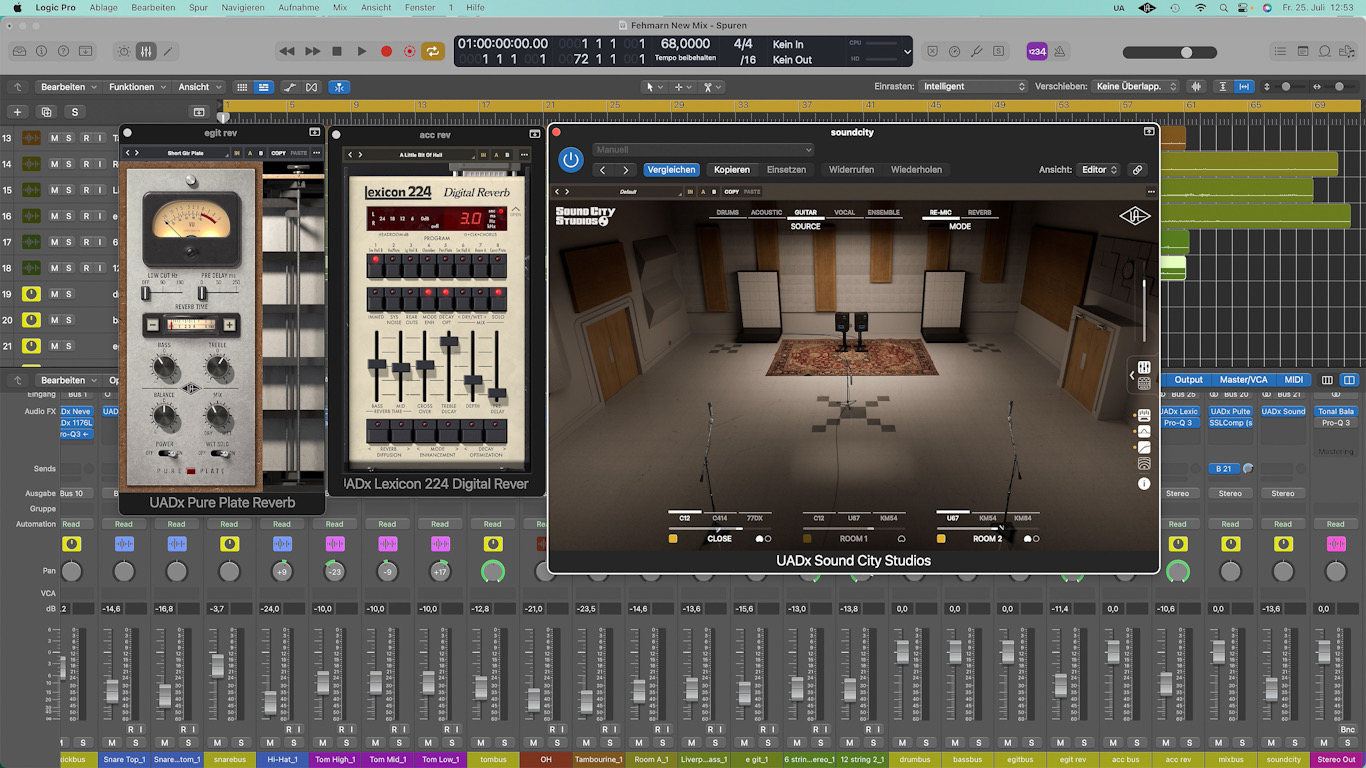
Hallräume erzeugen

Als letzten Schritt lege ich mir den Pultec und den SSL Bus Kompressor auf den Mixbus. Beim Pultec mit dem Pultec Trick auf die 60hz und mit dem Buskomppressor einen fast HipHop mässigen slow Attack und super kurzen Release damit es druckvoll und punchy klingt
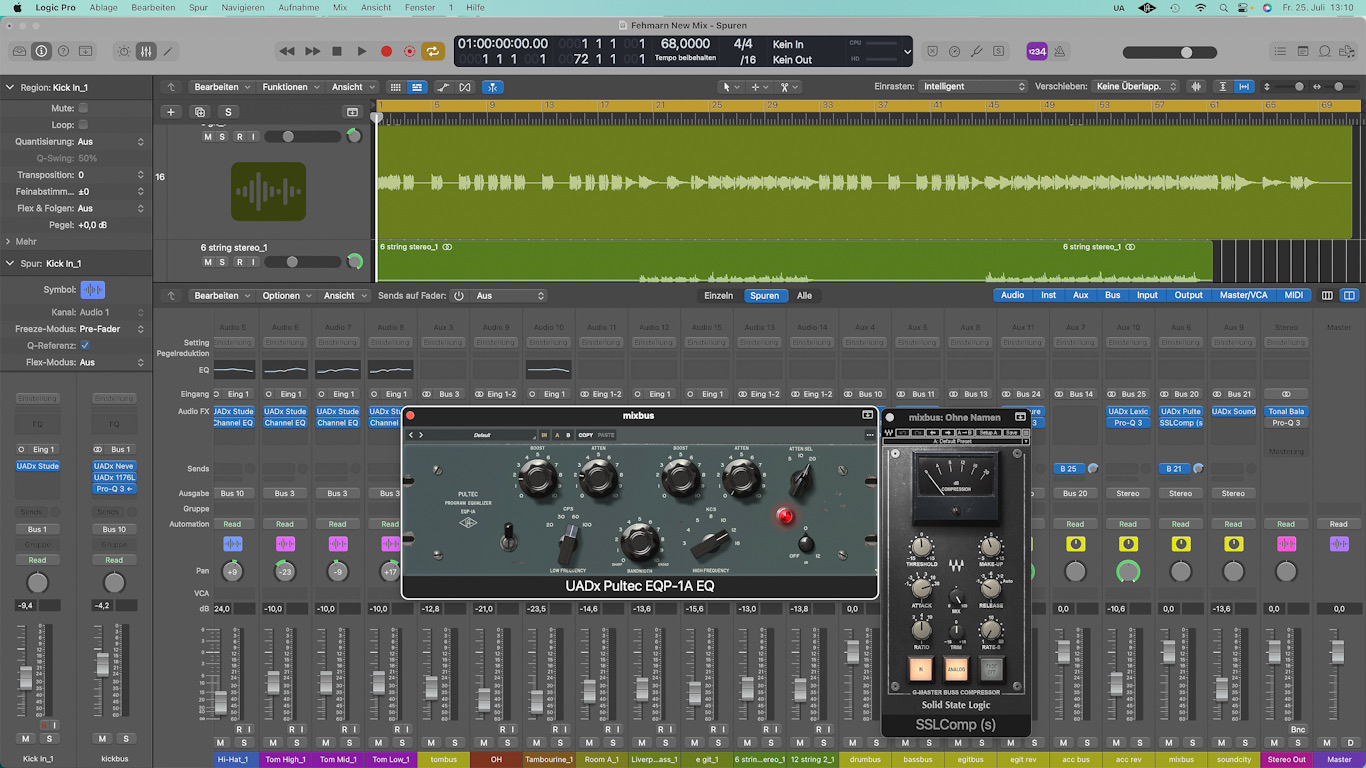
Mein Mixbus

Wow! Jetzt sind im Grunde genommen nur noch Kleinigkeiten nötig um das Lowend und die Mitten mit dem Pro Q3 aufzuräumen und wir haben vor uns eine lebendige Band im Aufnahmeraum stehen, die super aufeinander eingespielt ist und die wir jetzt mit der Bandmaschine aufnehmen können.

Was für ein verrückter Spaß!

my personal Tribute to Frank Sinatra – Summerwind & Fly me to the Moon

Cover für den New Release der frankieband
frankieband - swings

A Tribute to Sinatra

Who hasn’t dreamed of singing their all-time favorite songs backed by a grand orchestra?
To be honest—I hadn’t.
The sheer respect I had for the technical complexity of such a production was simply too great.

From finding the right recording space, choosing the right microphones, mixing console, and analog tape deck, to achieving just the right sonic balance—it’s a massive undertaking. And then there’s that moment when you step up to the mic and have to deliver. No excuses. No sore throat, no sleepless nights to fall back on. Just you—and a lot of eyes watching.

How do you stay calm and focused enough to sing with ease and bring the essence of each track to life?

That is pure artistry.
A gift only one in a million possesses.
Let me introduce the master of this craft:

His effortlessly relaxed baritone voice… and no matter which song he sings, the message and emotion always come through loud and clear. Whether it’s My Way, Summer Wind, Fly Me to the Moon—or dozens of other classics—Sinatra embodies musical empathy at its finest.

For me, there’s only one way to approach this legacy:
With deep respect.

After all, these arrangements aim to stand alongside those performed with Count Basie himself—always swinging, always refined. A rhythm section with a light-footed double bass and crisp drums, a tastefully restrained guitar and piano, and a lush orchestra that weaves in and out of the vocal lines in playful dialogue. A true musical ballet.

Honestly?
I spent over six months working on this. Not continuously, but countless hours at my DAW, chasing the sound I imagined a swinging 1960s big band might have. Vintage in vibe, yet clean in delivery. Authentic to the spirit, not just the style.

Take Summer Wind—that breezy, carefree tune. It takes me straight to long beach walks in the late afternoon, when life feels light and uncomplicated. Far from frozen windshields or malfunctioning heaters. Just… living. And loving.

Or Fly Me to the Moon—a soundtrack to that magical “love at first sight” moment. When happiness lifts you off the ground—or sometimes launches you into space with sheer euphoria.

That’s what these songs are about.
A kind of musical antidepressant—instant mood-lifter, soul-soother, smile-bringer.

And that message?
It’s universal. It’s timeless.

So go ahead.
Treat yourself to this little joy

iTunes  amazon Spotify


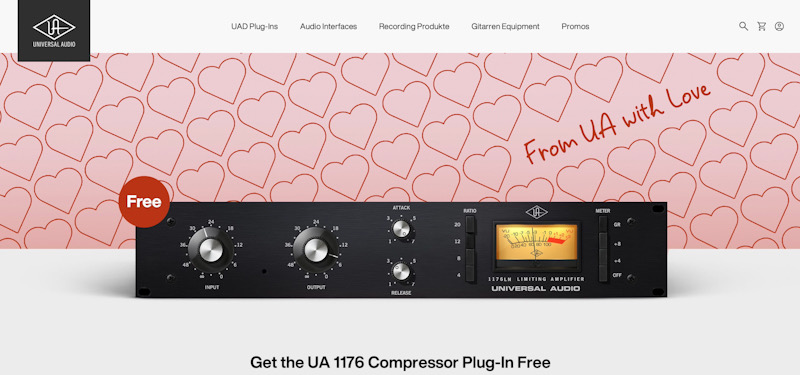
1176 for free by Universal Audio

Valentines Day Offer by Universal Audio

Yeah! Unbedingt zugreifen:

Pünktlich zum Valentinstag haut Universal Audio ein Spezialangebot raus, das aufhorchen lässt. Die LN Version des legendären 1176 Kompressors for free. Für Umme, für lau, für gar nüscht sozusagen.

Angebot gilt bis zum 28.02. also nix wie ran und holt euch das Ding!

How Digital Can Sound Analog

Digital goes analog

Three Small Steps

Alright, it’s 2025! I’m pretty sure about that. And yet, with my current production, I’ve basically hopped into a time machine and keep landing smack in the middle of the ’60s. It’s like I just discovered multitrack recording—what a time to be alive!

To get into the right headspace, it helps to listen to some handpicked productions from back in the day—or just stream a classic movie from directors like George Roy Hill or Arthur Penn, just to name a couple.

So here we are, experiencing a tech-driven media revolution years before the social upheaval of the late ’60s even kicks in.

We’re sitting in a recording studio with a massive live room, filled with a string orchestra, a brass section, an upright bass, a drum kit, a grand piano, and an acoustic guitar—basically, we’re about to produce a global hit.

Alright… now what?

Step One: Stay Cool!

In other words, don’t immediately start messing around with fancy plugins, surgical compressors, dynamic EQs, or—worst of all—Auto-Tune. Nope. Step away from the screen and go straight to the source: balance.

All we’re doing is setting the faders. And we take our sweet time with it. Now, don’t get me wrong—taking time doesn’t mean slow-motion knob-twisting. It means taking breaks. Check the mix after half an hour, in the evening, or even the next day.

Boring? Maybe. But also pretty damn cool.

Now that our ears are free from sonic junk, we move on to Step Two: EQ.

Step Two: The EQ—Keep It Groovy

Don’t forget: We’re still in the ’60s, and our EQ options are limited to bass, mids, and treble. So, keep your hands off that sweeping EQ trick and instead, go broad and relaxed—use your ears, not your eyes on a frequency analyzer.

Which EQ should you use? Doesn’t really matter. Just keep it smooth, subtle, and not too extreme.

How does it sound? Great? Then let’s jump to Step Three!

Wait—NOPE. Not so fast. We circle back to Step One and let the whole thing breathe. Like a fine old wine.

Not because we believe some magical fermentation process will refine our mix, but because we need to clear our auditory palette again. Let’s take a moment to think about what a ’60s mix rack might have looked like—what was in it, and why?

Step Three: Painting with Sound Colors

On my virtual time-travel adventure, I’ve built myself a mega-rack of Pultec EQs, 1176s, LA2As, and a Fairchild.

The beauty of modern times? I can actually *afford* this setup! Because, let’s be real—this rack would’ve been just as financially impossible back then as it is now.

The trick is to embrace the sonic character of these beauties and use them wisely for the final step:

**Painting with Sound Colors.**

Sounds a bit like paint-by-numbers, right? Well, in a way, it is.

Just like in a nuanced, pointillist painting, we achieve the best results by layering tiny details—only in their sum do we reach the full sonic picture.

The magic lies in the accumulation of all those subtle adjustments—this is what truly shapes the final sound of the mix.

And that’s it from Studio Pfütze! Time to put my headphones back on and keep painting my mix. Catch you on the airwaves!